Zoo \ Lemur

The Krafsur Family Lemur Exhibit, also fondly referred to as Lemur Land, is a unique enclosure. The exhibit is situated on a side path that descends along a steep slope, and visitors are welcome to enter the enclosure by passing through double doors. Immediately upon entry, one meets up with four different types of lemur, all of them wandering freely in a broad and spacious enclosure, with no partitions or obstructions coming between them and their human visitors. The residents of Lemur Land include the Ring-tailed lemur (Lemur catta), the Brown lemur (Lemur fulvus fulvus), the Black-and-white ruffed lemur (Varecia variegata variegata), and the Red ruffed lemur (Varecia variegata rubra). The exhibit is staffed at all times by keepers, volunteers, or guides, who are always ready to provide explanations regarding the lemurs and their forest habitats on the island of Madagascar.
Whenever you visit the zoo, please note the opening hours for this particular exhibit.
http://www.jerusalemzoo.org.il/english/upload/tour/lemur.html
Whenever you visit the zoo, please note the opening hours for this particular exhibit.
http://www.jerusalemzoo.org.il/english/upload/tour/lemur.html
 © RomKri
The keeper of traditions
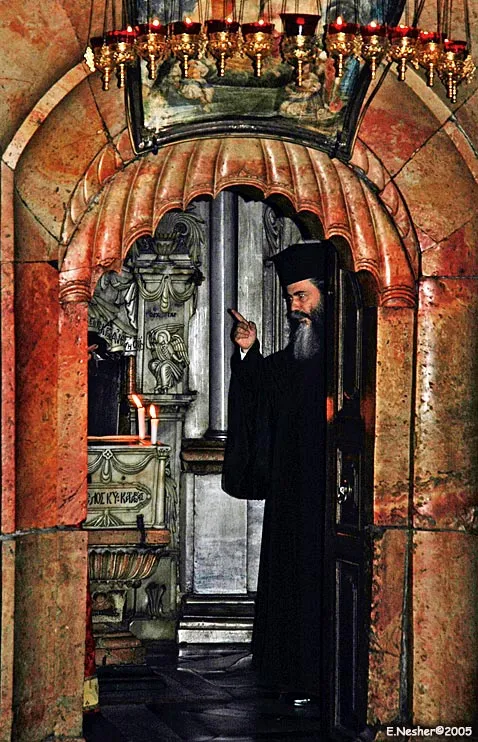
 © Evgeny Nesher
Zoo \ Syrian Brown Bear

In the early part of the twentieth century, the Syrian brown bear (Ursus arctos syriacus) disappeared from the landscape of the Land of Israel. In the distant past, bears were quite common in this country, and the Biblical literature suggests that once upon a time, the human inhabitants of the region would frequently encounter these beasts. The bears in the zoo are among the last survivors of this subspecies, which is now thought to be extinct in the wild. Incidentally, these bears are generally regarded today as members of the same species as the Grizzlies.
The family of bears in our exhibit is relatively large, very active, and quite irrepressible. At times you can meet the keepers at this exhibit, and hear interesting stories about the individual bears. On any day, you can see them frolic in the water, and see unmistakable evidence of their keen intelligence.
http://www.jerusalemzoo.org.il/english/upload/tour/bear.html
The family of bears in our exhibit is relatively large, very active, and quite irrepressible. At times you can meet the keepers at this exhibit, and hear interesting stories about the individual bears. On any day, you can see them frolic in the water, and see unmistakable evidence of their keen intelligence.
http://www.jerusalemzoo.org.il/english/upload/tour/bear.html
Zoo \ The Asian Elephants

The Jerusalem Biblical Zoo is especially proud of its elephant exhibit. The Sarah Haefner Elephant House and Enclosure is home to a herd of four elephant cows brought here from Thailand. Our females are now once again enjoying the company of a young Israeli-born male named Teddy, who joined them in September 2001. The elephants all belong to the Asiatic species Elephas maximus.
Our elephant keepers work with the animals using methods similar to those employed in Thailand. These methods involve having the keeper accompany the elephant at all times throughout most of the day. In Thailand, a keeper is involved in more than simple, basic animal care such as cleaning, feeding, and caring for the animal's surroundings and living arrangements; rather, he also functions as a trainer, developing the elephant's skills in performing tasks such as the pushing and hauling of heavy tree trunks. By making use of this system in our zoo, we can afford to enrich the elephant's experience with stimulating activities, for instance walks outside the compound and throughout the zoo. Apart from enhancing the elephant's health and welfare, such walks are also a source of entertainment for our visitors, who are thrilled at the sight of a row of elephants marching in single file, with each trunk grasping the tail in front of it. In addition, such intimate handling of the elephant herd allows us to simplify medical treatment, and easily perform basic procedures such as injections and blood tests. Under different circumstances, when elephants are not appropriately trained, such procedures can be quite complex, and anesthesia is required.
We are happy to illustrate the special skills that our elephants have acquired by conducting elephant demonstrations in the exhibit on a regular basis. These demonstrations take place during holidays, as well as throughout the summer break.
http://www.jerusalemzoo.org.il/english/upload/tour/elephants.html
Our elephant keepers work with the animals using methods similar to those employed in Thailand. These methods involve having the keeper accompany the elephant at all times throughout most of the day. In Thailand, a keeper is involved in more than simple, basic animal care such as cleaning, feeding, and caring for the animal's surroundings and living arrangements; rather, he also functions as a trainer, developing the elephant's skills in performing tasks such as the pushing and hauling of heavy tree trunks. By making use of this system in our zoo, we can afford to enrich the elephant's experience with stimulating activities, for instance walks outside the compound and throughout the zoo. Apart from enhancing the elephant's health and welfare, such walks are also a source of entertainment for our visitors, who are thrilled at the sight of a row of elephants marching in single file, with each trunk grasping the tail in front of it. In addition, such intimate handling of the elephant herd allows us to simplify medical treatment, and easily perform basic procedures such as injections and blood tests. Under different circumstances, when elephants are not appropriately trained, such procedures can be quite complex, and anesthesia is required.
We are happy to illustrate the special skills that our elephants have acquired by conducting elephant demonstrations in the exhibit on a regular basis. These demonstrations take place during holidays, as well as throughout the summer break.
http://www.jerusalemzoo.org.il/english/upload/tour/elephants.html

 © Pes & Lev
Zoo \ The Penguins

A gift of the Zaidenberg family of Chicago, Illinois, the Penguin Exhibit was opened in the summer of 2000. It is one of the most attractive exhibits in the zoo, enabling the public to view our Black-footed penguins (Spheniscus demersus) both on land and in the water. Although we tend to automatically associate penguins with frigid environments, the Black-footed species is native to South Africa, and is accustomed to a warm temperate climate. In fact, there are some 17 species of penguin in the world, and only two of them actually live in Antarctica.
Two or three feedings take place in the exhibit every day. If you're lucky enough to witness one of these feedings, you'll undoubtedly be amused by the raucous manner in which the penguins gang up on their keeper to receive their portion of fish, which is then swallowed whole, with one long gulp. Also noteworthy is the ability of the keeper who must, amidst all the insanity, keep track of just who is eating what, and how much!
http://www.jerusalemzoo.org.il/english/upload/tour/penguins.html
Two or three feedings take place in the exhibit every day. If you're lucky enough to witness one of these feedings, you'll undoubtedly be amused by the raucous manner in which the penguins gang up on their keeper to receive their portion of fish, which is then swallowed whole, with one long gulp. Also noteworthy is the ability of the keeper who must, amidst all the insanity, keep track of just who is eating what, and how much!
http://www.jerusalemzoo.org.il/english/upload/tour/penguins.html
Zoo \ The Asian Elephants

The Jerusalem Biblical Zoo is especially proud of its elephant exhibit. The Sarah Haefner Elephant House and Enclosure is home to a herd of four elephant cows brought here from Thailand. Our females are now once again enjoying the company of a young Israeli-born male named Teddy, who joined them in September 2001. The elephants all belong to the Asiatic species Elephas maximus.
Our elephant keepers work with the animals using methods similar to those employed in Thailand. These methods involve having the keeper accompany the elephant at all times throughout most of the day. In Thailand, a keeper is involved in more than simple, basic animal care such as cleaning, feeding, and caring for the animal's surroundings and living arrangements; rather, he also functions as a trainer, developing the elephant's skills in performing tasks such as the pushing and hauling of heavy tree trunks. By making use of this system in our zoo, we can afford to enrich the elephant's experience with stimulating activities, for instance walks outside the compound and throughout the zoo. Apart from enhancing the elephant's health and welfare, such walks are also a source of entertainment for our visitors, who are thrilled at the sight of a row of elephants marching in single file, with each trunk grasping the tail in front of it. In addition, such intimate handling of the elephant herd allows us to simplify medical treatment, and easily perform basic procedures such as injections and blood tests. Under different circumstances, when elephants are not appropriately trained, such procedures can be quite complex, and anesthesia is required.
We are happy to illustrate the special skills that our elephants have acquired by conducting elephant demonstrations in the exhibit on a regular basis. These demonstrations take place during holidays, as well as throughout the summer break.
http://www.jerusalemzoo.org.il/english/upload/tour/elephants.html
Our elephant keepers work with the animals using methods similar to those employed in Thailand. These methods involve having the keeper accompany the elephant at all times throughout most of the day. In Thailand, a keeper is involved in more than simple, basic animal care such as cleaning, feeding, and caring for the animal's surroundings and living arrangements; rather, he also functions as a trainer, developing the elephant's skills in performing tasks such as the pushing and hauling of heavy tree trunks. By making use of this system in our zoo, we can afford to enrich the elephant's experience with stimulating activities, for instance walks outside the compound and throughout the zoo. Apart from enhancing the elephant's health and welfare, such walks are also a source of entertainment for our visitors, who are thrilled at the sight of a row of elephants marching in single file, with each trunk grasping the tail in front of it. In addition, such intimate handling of the elephant herd allows us to simplify medical treatment, and easily perform basic procedures such as injections and blood tests. Under different circumstances, when elephants are not appropriately trained, such procedures can be quite complex, and anesthesia is required.
We are happy to illustrate the special skills that our elephants have acquired by conducting elephant demonstrations in the exhibit on a regular basis. These demonstrations take place during holidays, as well as throughout the summer break.
http://www.jerusalemzoo.org.il/english/upload/tour/elephants.html