Night photos \ Entrance into Western Wall

 © RomKri
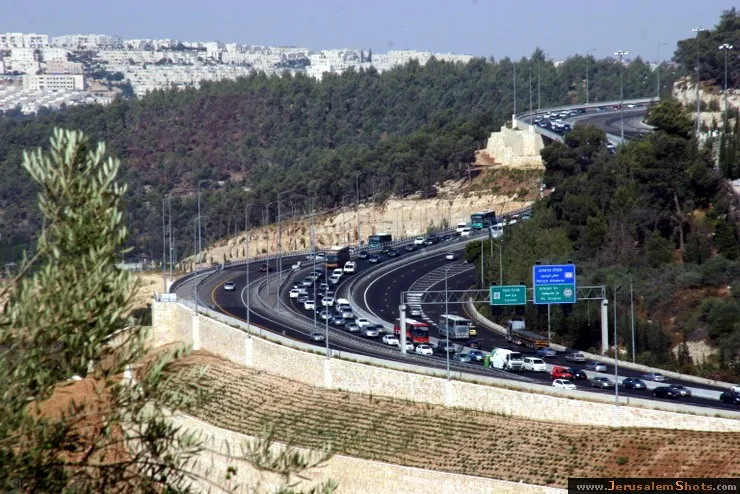
Highway No 1 Tel Aviv Jerusalem
20 July 2009
Highway No 1 is the main highway connecting Tel Aviv with Jerusalem. Highway continues into the occupied West Bank past the Israeli settlement of Ma'ale Adummim, and is then downgraded in size until the Beit HaArava Junction with Route 90 south of Jericho near the shores of the Dead Sea.
Highway No 1 is the main highway connecting Tel Aviv with Jerusalem. Highway continues into the occupied West Bank past the Israeli settlement of Ma'ale Adummim, and is then downgraded in size until the Beit HaArava Junction with Route 90 south of Jericho near the shores of the Dead Sea.


 © Valery Dembitsky
The Church of All Nations

The chapel was built between 1919 and 1924 using funds donated from many different countries. The respective coat-of-arms of each donating country are incorporated into the glass of the ceiling, each in a separate, small dome, and also into the interior mosaics. The countries honored in this way are; starting from the left side, beginning with the apse: Argentina, Brazil, Chile and Mexico; in the middle of the church are memorialized: Italy, France, Spain and the United Kingdom, and to the right: Belgium, Canada, Germany, and the United States of America. The mosaics in the apses were donated by Ireland, Hungary, and Poland. The crown around the bedrock itself was a gift of Australia. These multi-national donations give the church its present title as the Church of "All Nations".
Highway No 1 Tel Aviv Jerusalem

20 July 2009
Highway No 1 is the main highway connecting Tel Aviv with Jerusalem. Highway continues into the occupied West Bank past the Israeli settlement of Ma'ale Adummim, and is then downgraded in size until the Beit HaArava Junction with Route 90 south of Jericho near the shores of the Dead Sea.
Highway No 1 is the main highway connecting Tel Aviv with Jerusalem. Highway continues into the occupied West Bank past the Israeli settlement of Ma'ale Adummim, and is then downgraded in size until the Beit HaArava Junction with Route 90 south of Jericho near the shores of the Dead Sea.
The Church of All Nations

The chapel was built between 1919 and 1924 using funds donated from many different countries. The respective coat-of-arms of each donating country are incorporated into the glass of the ceiling, each in a separate, small dome, and also into the interior mosaics. The countries honored in this way are; starting from the left side, beginning with the apse: Argentina, Brazil, Chile and Mexico; in the middle of the church are memorialized: Italy, France, Spain and the United Kingdom, and to the right: Belgium, Canada, Germany, and the United States of America. The mosaics in the apses were donated by Ireland, Hungary, and Poland. The crown around the bedrock itself was a gift of Australia. These multi-national donations give the church its present title as the Church of "All Nations".
The Church of All Nations
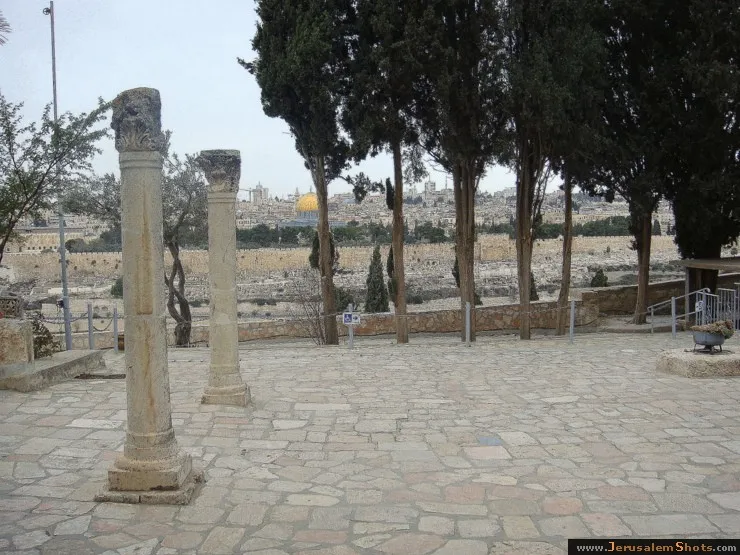
The chapel was built between 1919 and 1924 using funds donated from many different countries. The respective coat-of-arms of each donating country are incorporated into the glass of the ceiling, each in a separate, small dome, and also into the interior mosaics. The countries honored in this way are; starting from the left side, beginning with the apse: Argentina, Brazil, Chile and Mexico; in the middle of the church are memorialized: Italy, France, Spain and the United Kingdom, and to the right: Belgium, Canada, Germany, and the United States of America. The mosaics in the apses were donated by Ireland, Hungary, and Poland. The crown around the bedrock itself was a gift of Australia. These multi-national donations give the church its present title as the Church of "All Nations".
The Church of All Nations

The chapel was built between 1919 and 1924 using funds donated from many different countries. The respective coat-of-arms of each donating country are incorporated into the glass of the ceiling, each in a separate, small dome, and also into the interior mosaics. The countries honored in this way are; starting from the left side, beginning with the apse: Argentina, Brazil, Chile and Mexico; in the middle of the church are memorialized: Italy, France, Spain and the United Kingdom, and to the right: Belgium, Canada, Germany, and the United States of America. The mosaics in the apses were donated by Ireland, Hungary, and Poland. The crown around the bedrock itself was a gift of Australia. These multi-national donations give the church its present title as the Church of "All Nations".
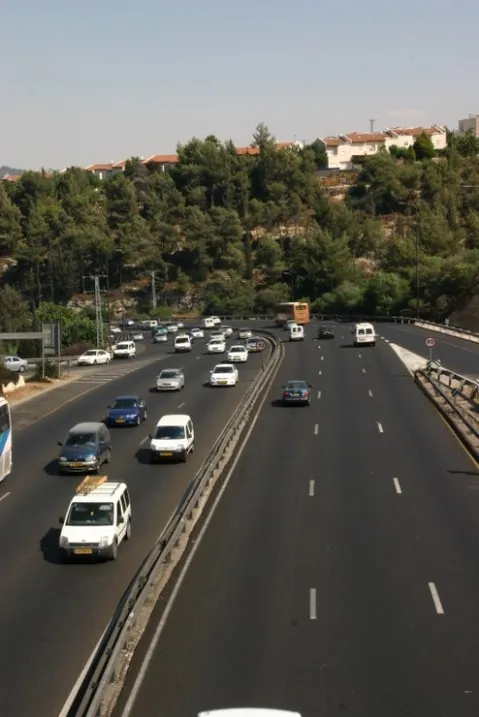
Highway No 1 Tel Aviv Jerusalem
20 July 2009
Highway No 1 is the main highway connecting Tel Aviv with Jerusalem. Highway continues into the occupied West Bank past the Israeli settlement of Ma'ale Adummim, and is then downgraded in size until the Beit HaArava Junction with Route 90 south of Jericho near the shores of the Dead Sea.
Highway No 1 is the main highway connecting Tel Aviv with Jerusalem. Highway continues into the occupied West Bank past the Israeli settlement of Ma'ale Adummim, and is then downgraded in size until the Beit HaArava Junction with Route 90 south of Jericho near the shores of the Dead Sea.
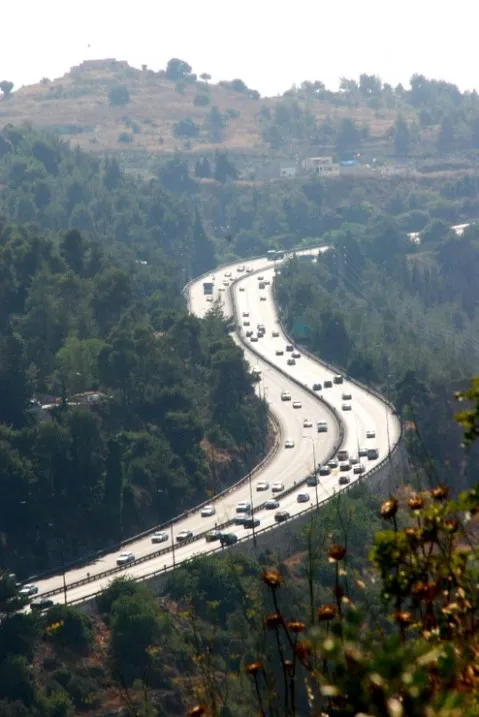
Highway No 1 Tel Aviv Jerusalem
20 July 2009
Highway No 1 is the main highway connecting Tel Aviv with Jerusalem. Highway continues into the occupied West Bank past the Israeli settlement of Ma'ale Adummim, and is then downgraded in size until the Beit HaArava Junction with Route 90 south of Jericho near the shores of the Dead Sea.
Highway No 1 is the main highway connecting Tel Aviv with Jerusalem. Highway continues into the occupied West Bank past the Israeli settlement of Ma'ale Adummim, and is then downgraded in size until the Beit HaArava Junction with Route 90 south of Jericho near the shores of the Dead Sea.
Highway No 1 Tel Aviv Jerusalem
20 July 2009
Highway No 1 is the main highway connecting Tel Aviv with Jerusalem. Highway continues into the occupied West Bank past the Israeli settlement of Ma'ale Adummim, and is then downgraded in size until the Beit HaArava Junction with Route 90 south of Jericho near the shores of the Dead Sea.
Highway No 1 is the main highway connecting Tel Aviv with Jerusalem. Highway continues into the occupied West Bank past the Israeli settlement of Ma'ale Adummim, and is then downgraded in size until the Beit HaArava Junction with Route 90 south of Jericho near the shores of the Dead Sea.
Augusta Victoria Hospital, East Jerusalem
24 July 2009
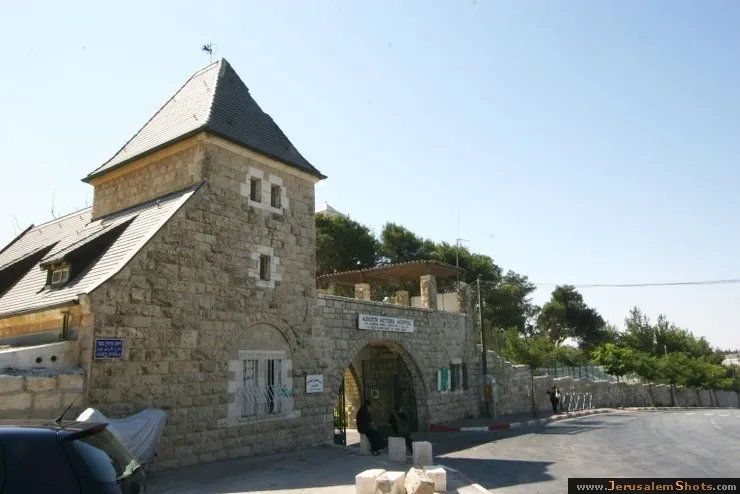
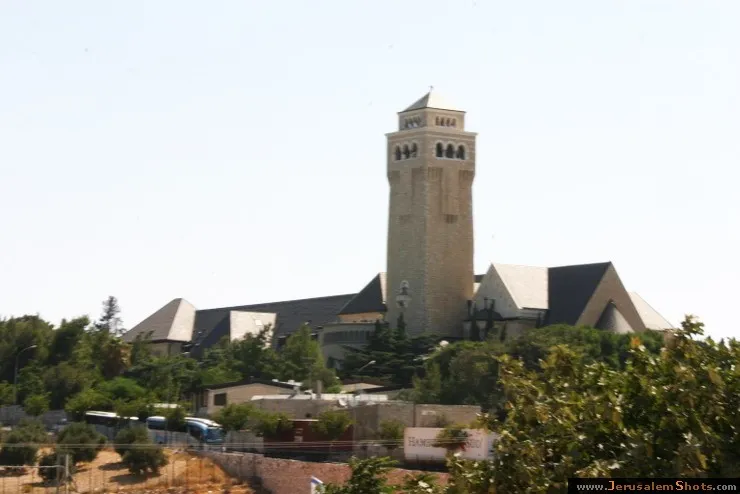
Augusta Victoria is a 161-bed hospital on Mount Scopus, Jerusalem, financed by the Lutheran World Federation and the United Nations Refugee Works Administration. Augusta Victoria was built in 1907 as a center for the German Protestant community in Ottoman Palestine. The complex, completed in 1910, included the Evangelical Lutheran Church of the Ascension with a 65-meter belltower and a hospice for Christian pilgrims. During World War II, it was converted into a hospital by the British. The complex was named for Augusta Viktoria of Schleswig-Holstein, wife of German Kaiser Wilhelm II, who visited Jerusalem in 1898. The architect, Robert Leibnitz, was inspired by German palaces, such as the German Hohenzollern.
Augusta Victoria is a 161-bed hospital on Mount Scopus, Jerusalem, financed by the Lutheran World Federation and the United Nations Refugee Works Administration. Augusta Victoria was built in 1907 as a center for the German Protestant community in Ottoman Palestine. The complex, completed in 1910, included the Evangelical Lutheran Church of the Ascension with a 65-meter belltower and a hospice for Christian pilgrims. During World War II, it was converted into a hospital by the British. The complex was named for Augusta Viktoria of Schleswig-Holstein, wife of German Kaiser Wilhelm II, who visited Jerusalem in 1898. The architect, Robert Leibnitz, was inspired by German palaces, such as the German Hohenzollern.
Hyatt Regency Jerusalem

24 July 2009
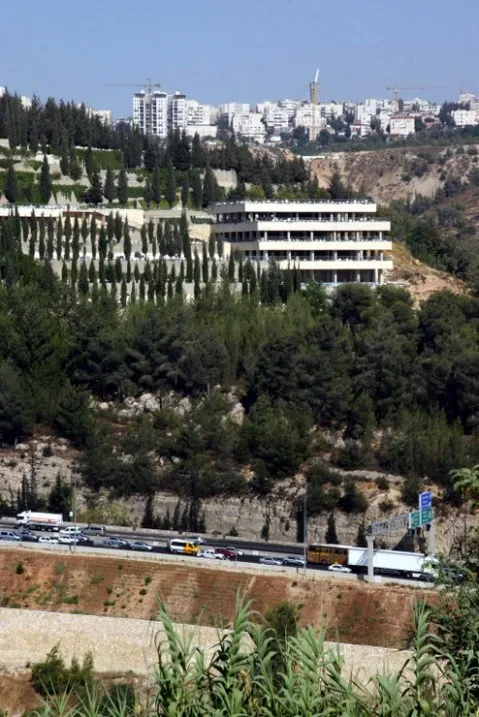
Set away from the bustle of the city on top of Mount Scopus, this hotel - which is integrated into the mountainside - offers a breathtaking panorama of the new and Old City and beyond into the Judean Hills. The Regency Jerusalem – which no longer has any affiliation with Hyatt – has 502 rooms on nine floors.
Set away from the bustle of the city on top of Mount Scopus, this hotel - which is integrated into the mountainside - offers a breathtaking panorama of the new and Old City and beyond into the Judean Hills. The Regency Jerusalem – which no longer has any affiliation with Hyatt – has 502 rooms on nine floors.
Augusta Victoria Hospital, East Jerusalem

24 July 2009
Augusta Victoria is a 161-bed hospital on Mount Scopus, Jerusalem, financed by the Lutheran World Federation and the United Nations Refugee Works Administration. Augusta Victoria was built in 1907 as a center for the German Protestant community in Ottoman Palestine. The complex, completed in 1910, included the Evangelical Lutheran Church of the Ascension with a 65-meter belltower and a hospice for Christian pilgrims. During World War II, it was converted into a hospital by the British. The complex was named for Augusta Viktoria of Schleswig-Holstein, wife of German Kaiser Wilhelm II, who visited Jerusalem in 1898. The architect, Robert Leibnitz, was inspired by German palaces, such as the German Hohenzollern.
Augusta Victoria is a 161-bed hospital on Mount Scopus, Jerusalem, financed by the Lutheran World Federation and the United Nations Refugee Works Administration. Augusta Victoria was built in 1907 as a center for the German Protestant community in Ottoman Palestine. The complex, completed in 1910, included the Evangelical Lutheran Church of the Ascension with a 65-meter belltower and a hospice for Christian pilgrims. During World War II, it was converted into a hospital by the British. The complex was named for Augusta Viktoria of Schleswig-Holstein, wife of German Kaiser Wilhelm II, who visited Jerusalem in 1898. The architect, Robert Leibnitz, was inspired by German palaces, such as the German Hohenzollern.
Augusta Victoria Hospital, East Jerusalem
24 July 2009
Augusta Victoria is a 161-bed hospital on Mount Scopus, Jerusalem, financed by the Lutheran World Federation and the United Nations Refugee Works Administration. Augusta Victoria was built in 1907 as a center for the German Protestant community in Ottoman Palestine. The complex, completed in 1910, included the Evangelical Lutheran Church of the Ascension with a 65-meter belltower and a hospice for Christian pilgrims. During World War II, it was converted into a hospital by the British. The complex was named for Augusta Viktoria of Schleswig-Holstein, wife of German Kaiser Wilhelm II, who visited Jerusalem in 1898. The architect, Robert Leibnitz, was inspired by German palaces, such as the German Hohenzollern.
Augusta Victoria is a 161-bed hospital on Mount Scopus, Jerusalem, financed by the Lutheran World Federation and the United Nations Refugee Works Administration. Augusta Victoria was built in 1907 as a center for the German Protestant community in Ottoman Palestine. The complex, completed in 1910, included the Evangelical Lutheran Church of the Ascension with a 65-meter belltower and a hospice for Christian pilgrims. During World War II, it was converted into a hospital by the British. The complex was named for Augusta Viktoria of Schleswig-Holstein, wife of German Kaiser Wilhelm II, who visited Jerusalem in 1898. The architect, Robert Leibnitz, was inspired by German palaces, such as the German Hohenzollern.
Jerusalem. Center City.

Having curtailed into a court yard from street Hillel...
Garbage in Red
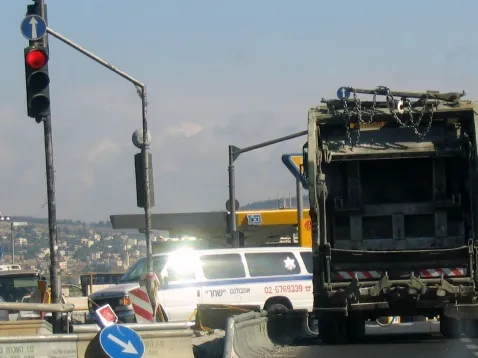
This garbage car was passing in red a moment before crashing into an ambulance..
 © Barak Sekeles
The Church of Dormition

The Church of Dormition on Mount Zion is the place where the Virgin Mary fell into eternal sleep. The church was built at the beginning of this century on the remains of previous churches built during the Byzantine and Crusader periods
From the book "The Holy Land"
From the book "The Holy Land"