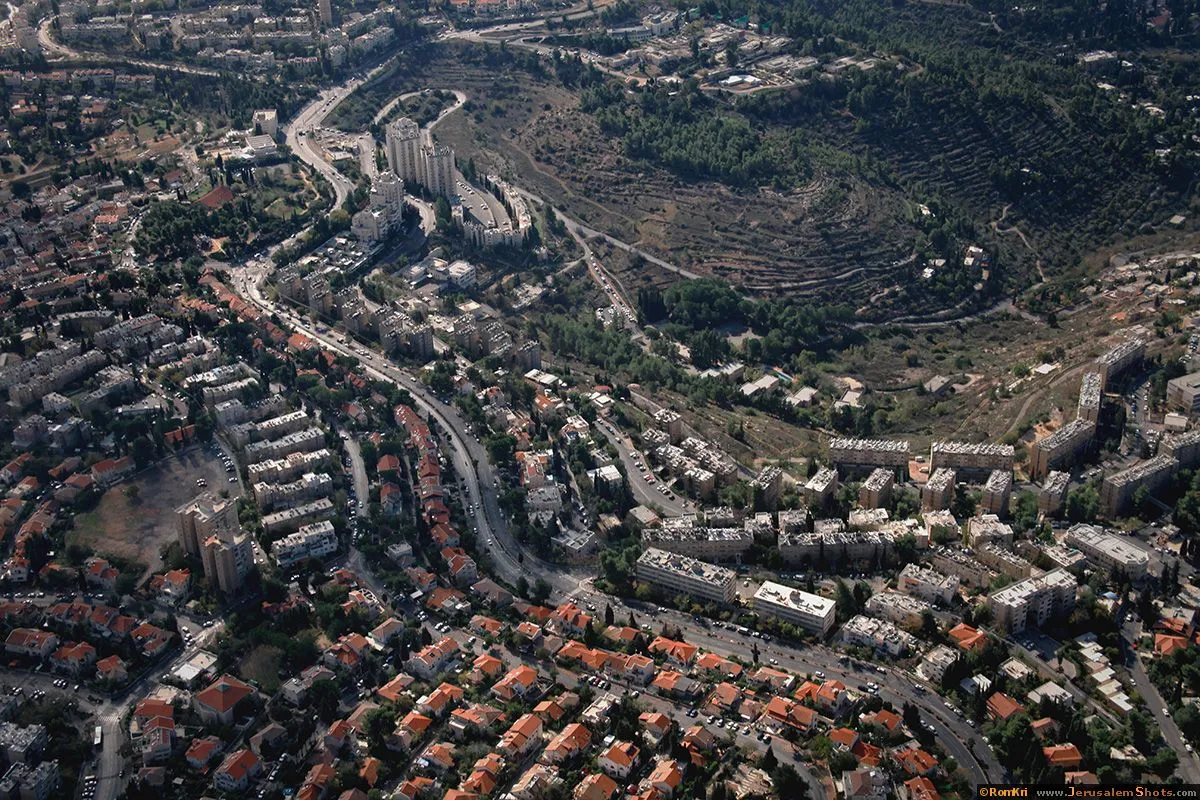
From the sky \ Handke street from the sky
 © RomKri
Young materials merchant

Elad Sherman
www.eladsherman.co.uk
www.eladsherman.co.uk

 © Elad Sherman
People


 © pmos_nmos
Hand of Teddy Kollek

Street view of El-Khanda Street

A narrow alleyway in the Old City of Jerusalem, featuring a street sign for El-Khanda Street and a shop with goods hanging outside.
The international arts and crafts fair Jerusalem.

People

 © Александр
The Asian Elephants
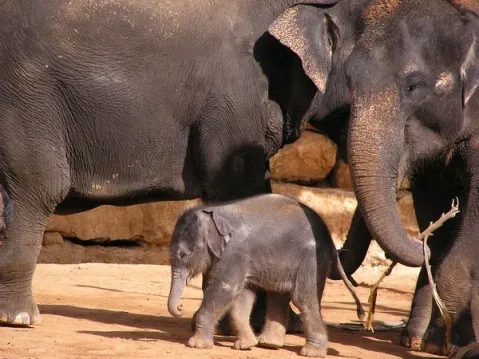
The Jerusalem Biblical Zoo is especially proud of its elephant exhibit. The Sarah Haefner Elephant House and Enclosure is home to a herd of four elephant cows brought here from Thailand. Our females are now once again enjoying the company of a young Israeli-born male named Teddy, who joined them in September 2001. The elephants all belong to the Asiatic species Elephas maximus.
Our elephant keepers work with the animals using methods similar to those employed in Thailand. These methods involve having the keeper accompany the elephant at all times throughout most of the day. In Thailand, a keeper is involved in more than simple, basic animal care such as cleaning, feeding, and caring for the animal's surroundings and living arrangements; rather, he also functions as a trainer, developing the elephant's skills in performing tasks such as the pushing and hauling of heavy tree trunks. By making use of this system in our zoo, we can afford to enrich the elephant's experience with stimulating activities, for instance walks outside the compound and throughout the zoo. Apart from enhancing the elephant's health and welfare, such walks are also a source of entertainment for our visitors, who are thrilled at the sight of a row of elephants marching in single file, with each trunk grasping the tail in front of it. In addition, such intimate handling of the elephant herd allows us to simplify medical treatment, and easily perform basic procedures such as injections and blood tests. Under different circumstances, when elephants are not appropriately trained, such procedures can be quite complex, and anesthesia is required.
We are happy to illustrate the special skills that our elephants have acquired by conducting elephant demonstrations in the exhibit on a regular basis. These demonstrations take place during holidays, as well as throughout the summer break.
http://www.jerusalemzoo.org.il/english/upload/tour/elephants.html
Our elephant keepers work with the animals using methods similar to those employed in Thailand. These methods involve having the keeper accompany the elephant at all times throughout most of the day. In Thailand, a keeper is involved in more than simple, basic animal care such as cleaning, feeding, and caring for the animal's surroundings and living arrangements; rather, he also functions as a trainer, developing the elephant's skills in performing tasks such as the pushing and hauling of heavy tree trunks. By making use of this system in our zoo, we can afford to enrich the elephant's experience with stimulating activities, for instance walks outside the compound and throughout the zoo. Apart from enhancing the elephant's health and welfare, such walks are also a source of entertainment for our visitors, who are thrilled at the sight of a row of elephants marching in single file, with each trunk grasping the tail in front of it. In addition, such intimate handling of the elephant herd allows us to simplify medical treatment, and easily perform basic procedures such as injections and blood tests. Under different circumstances, when elephants are not appropriately trained, such procedures can be quite complex, and anesthesia is required.
We are happy to illustrate the special skills that our elephants have acquired by conducting elephant demonstrations in the exhibit on a regular basis. These demonstrations take place during holidays, as well as throughout the summer break.
http://www.jerusalemzoo.org.il/english/upload/tour/elephants.html
Architecture sites, Monuments

 © אבי שדה
The Asian Elephants

The Jerusalem Biblical Zoo is especially proud of its elephant exhibit. The Sarah Haefner Elephant House and Enclosure is home to a herd of four elephant cows brought here from Thailand. Our females are now once again enjoying the company of a young Israeli-born male named Teddy, who joined them in September 2001. The elephants all belong to the Asiatic species Elephas maximus.
Our elephant keepers work with the animals using methods similar to those employed in Thailand. These methods involve having the keeper accompany the elephant at all times throughout most of the day. In Thailand, a keeper is involved in more than simple, basic animal care such as cleaning, feeding, and caring for the animal's surroundings and living arrangements; rather, he also functions as a trainer, developing the elephant's skills in performing tasks such as the pushing and hauling of heavy tree trunks. By making use of this system in our zoo, we can afford to enrich the elephant's experience with stimulating activities, for instance walks outside the compound and throughout the zoo. Apart from enhancing the elephant's health and welfare, such walks are also a source of entertainment for our visitors, who are thrilled at the sight of a row of elephants marching in single file, with each trunk grasping the tail in front of it. In addition, such intimate handling of the elephant herd allows us to simplify medical treatment, and easily perform basic procedures such as injections and blood tests. Under different circumstances, when elephants are not appropriately trained, such procedures can be quite complex, and anesthesia is required.
We are happy to illustrate the special skills that our elephants have acquired by conducting elephant demonstrations in the exhibit on a regular basis. These demonstrations take place during holidays, as well as throughout the summer break.
http://www.jerusalemzoo.org.il/english/upload/tour/elephants.html
Our elephant keepers work with the animals using methods similar to those employed in Thailand. These methods involve having the keeper accompany the elephant at all times throughout most of the day. In Thailand, a keeper is involved in more than simple, basic animal care such as cleaning, feeding, and caring for the animal's surroundings and living arrangements; rather, he also functions as a trainer, developing the elephant's skills in performing tasks such as the pushing and hauling of heavy tree trunks. By making use of this system in our zoo, we can afford to enrich the elephant's experience with stimulating activities, for instance walks outside the compound and throughout the zoo. Apart from enhancing the elephant's health and welfare, such walks are also a source of entertainment for our visitors, who are thrilled at the sight of a row of elephants marching in single file, with each trunk grasping the tail in front of it. In addition, such intimate handling of the elephant herd allows us to simplify medical treatment, and easily perform basic procedures such as injections and blood tests. Under different circumstances, when elephants are not appropriately trained, such procedures can be quite complex, and anesthesia is required.
We are happy to illustrate the special skills that our elephants have acquired by conducting elephant demonstrations in the exhibit on a regular basis. These demonstrations take place during holidays, as well as throughout the summer break.
http://www.jerusalemzoo.org.il/english/upload/tour/elephants.html
People
Panhandler relaxing on Ben Yehuda Mall
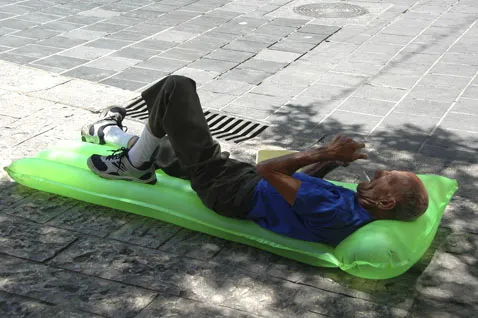
It was a hot day in July. Who could blame him?
Historical sites
