Old City \ Stone Architecture in the Old City
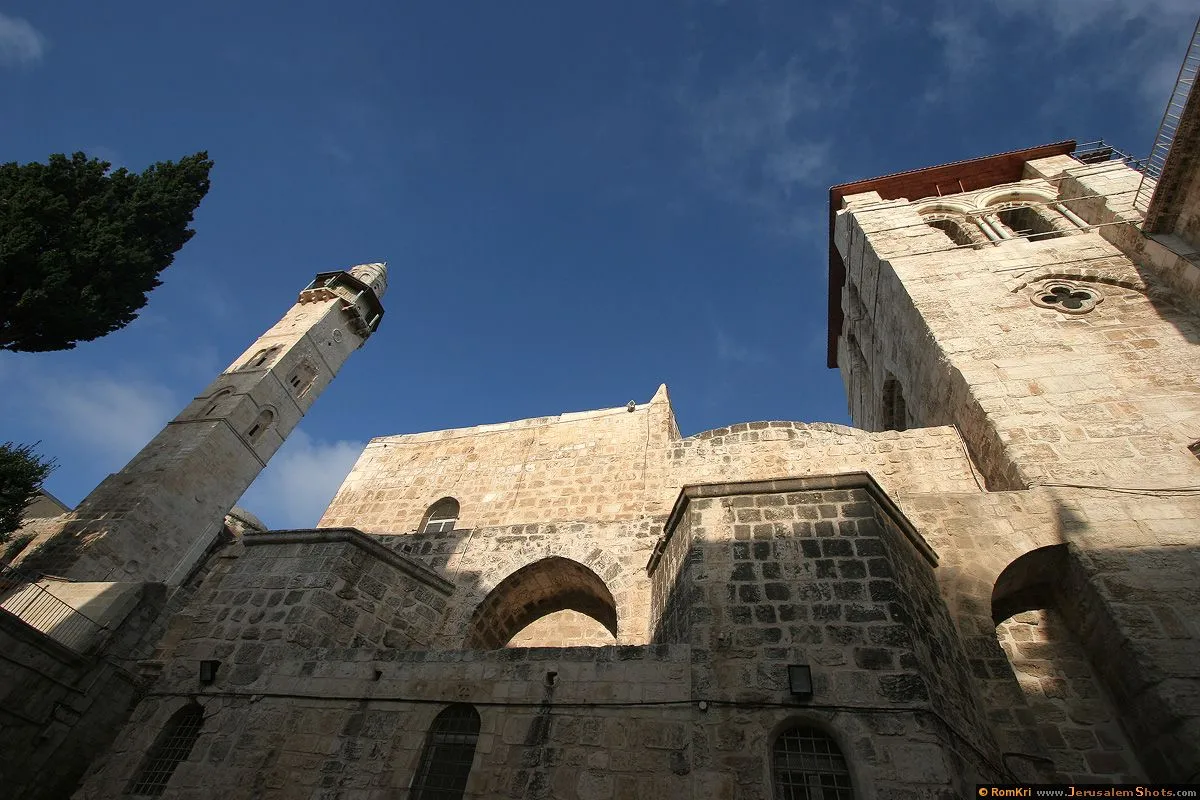
A view of ancient stone buildings and a minaret under a clear blue sky.
 © RomKri
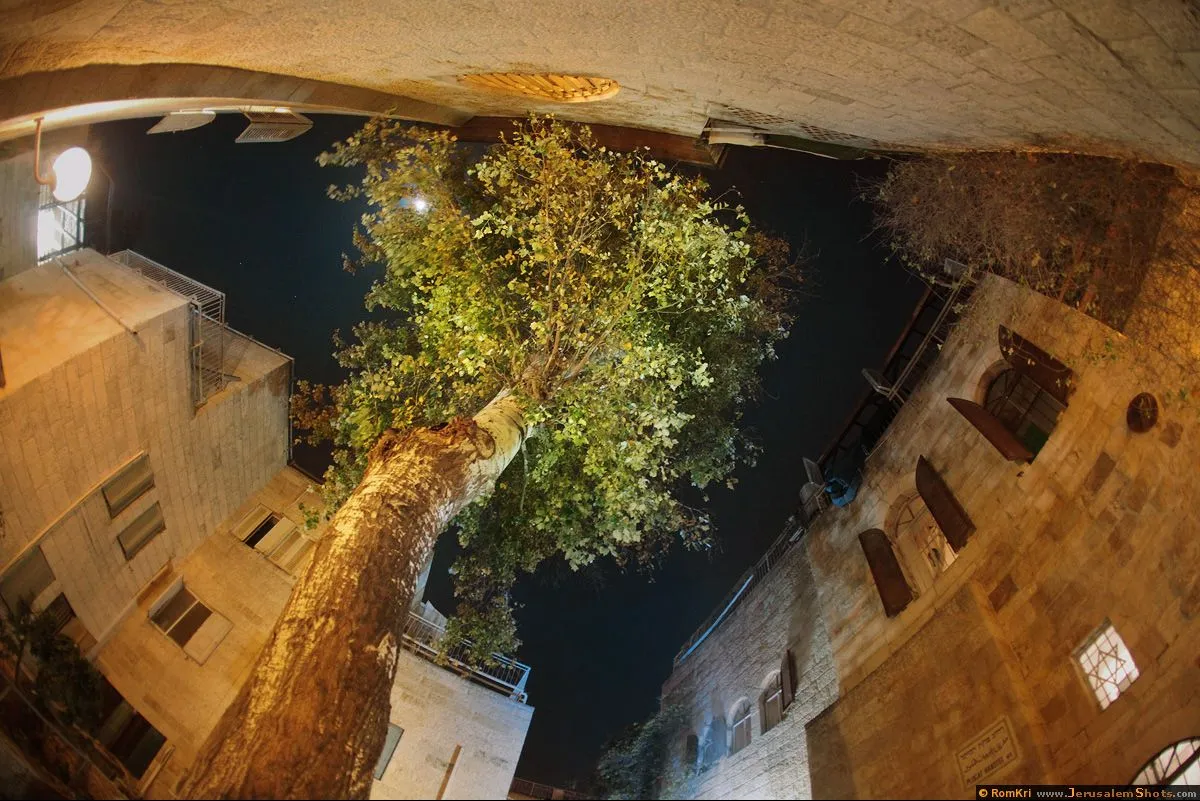
Old City \ An ancient tree in the Jewish Quarter
Old City \ Ancient Stone Walls of Jerusalem

A view of the massive, weathered stone walls and archaeological layers of Jerusalem's Old City. Greenery and ancient ruins are visible in the foreground.
Old City \ Stone Walls of the Old City

A view of the ancient stone walls and historic architecture in Jerusalem.
Old City \ Ancient Stone Wall and Ruins

A view of a massive stone wall of the Old City, with ancient stone fragments and ruins in the foreground.
Tomb of Absalom
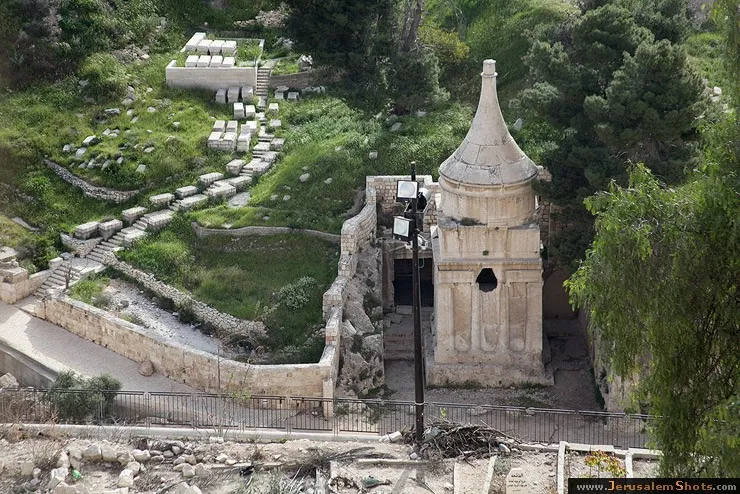
Tomb of Absalom (Hebrew: יד אבשלום, Transl. Yad Avshalom; literally Absalom´s Shrine), also called Absalom´s Pillar, is an ancient stone monument with a conical roof located in the Kidron Valley in Jerusalem, Israel. Although traditionally ascribed to Absalom, the rebellious son of King David of Israel (circa 1000 B.C.E.), recent scholarship has attributed it to the first century C.E.
(Wikipedia.org)
(Wikipedia.org)
Old City \ Stone Staircase and Ancient Wall
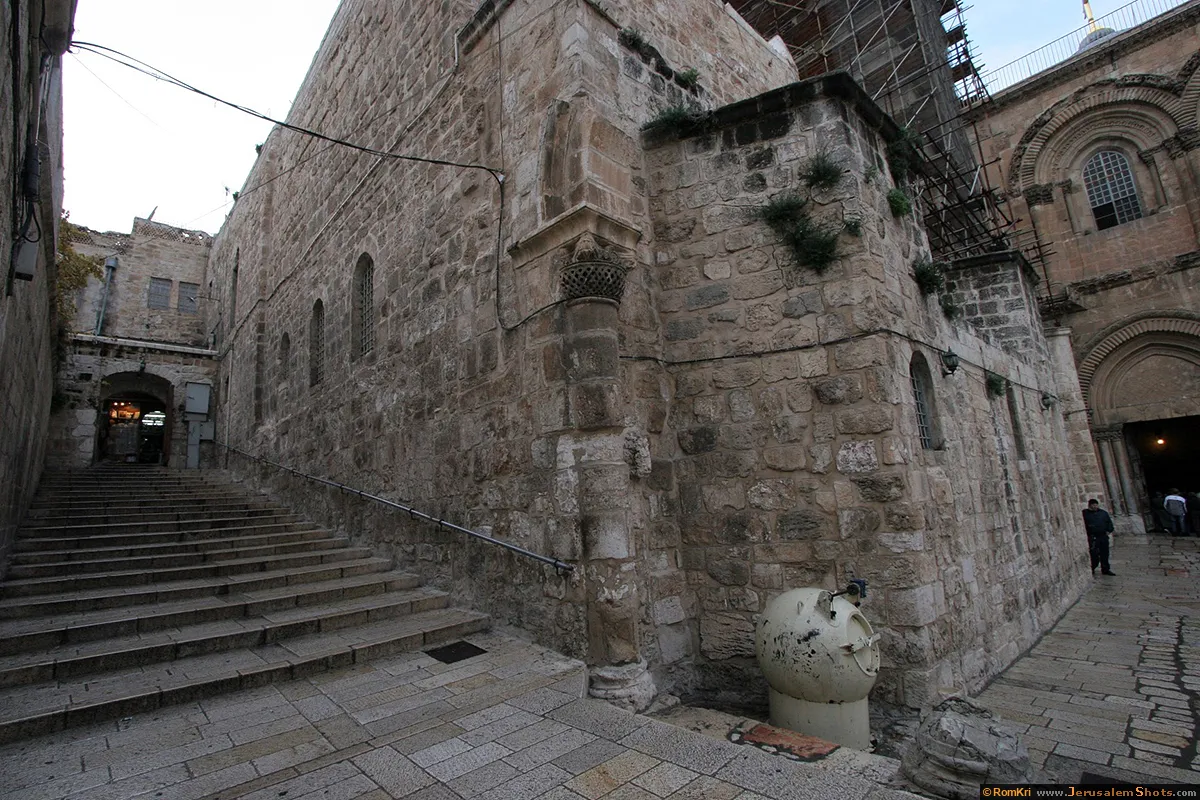
A wide stone staircase ascends alongside a massive, textured limestone wall in the Old City. In the foreground, a weathered stone basin sits near the corner, while scaffolding covers part of the upper structure on the right.
Old City \ Night view of the Old City walls and plaza
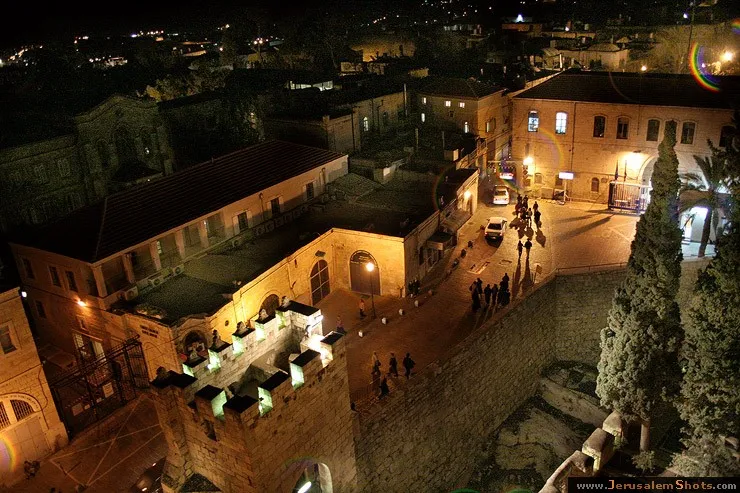
An elevated view of the stone walls and ancient buildings at night, with people walking through the plaza.
Jerusalem. Center City.
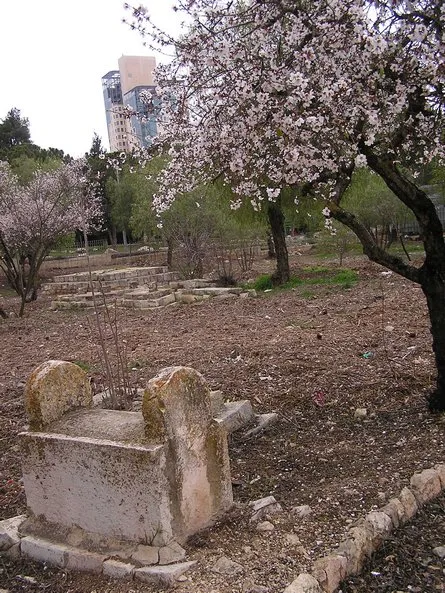
Ancient Arabian cemetery.

 © Pes & Lev
Jerusalem. Center City.
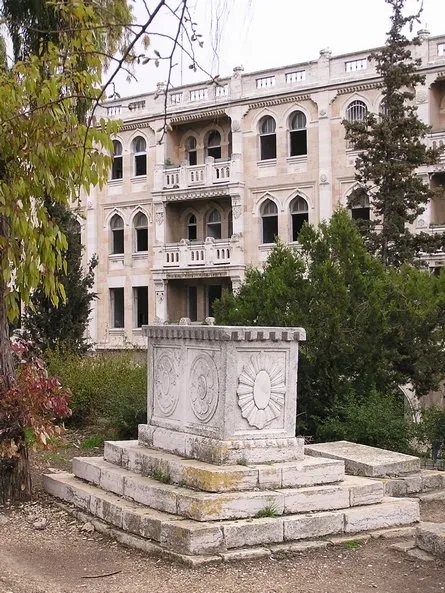
Tomb on an ancient Arabian cemetery.
Old City \ Minaret and Ancient Walls
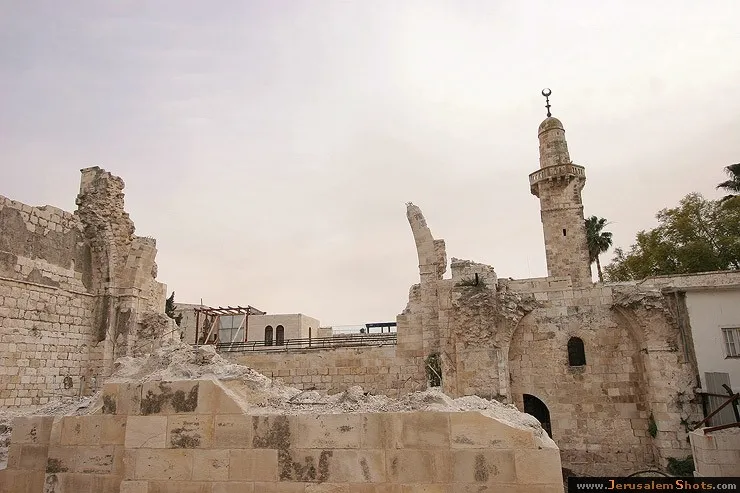
A view of a stone minaret and the weathered ruins of stone walls in the Old City.
The Ancient Synagogue
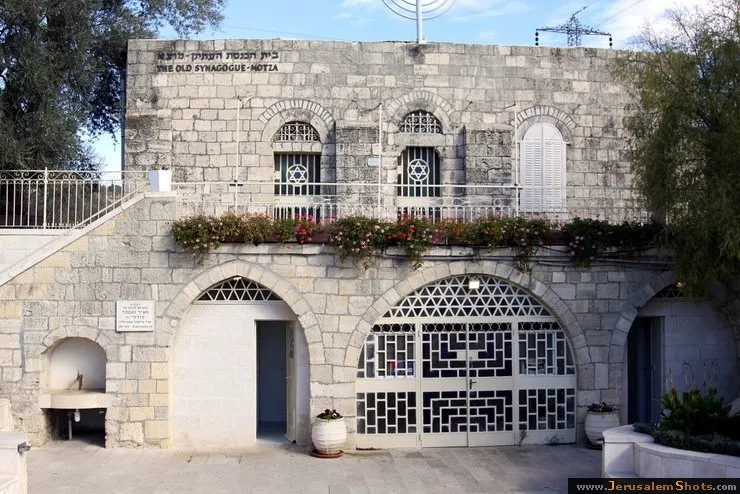
Motza is first mentioned in the Talmud (Tractate Succah) as the place where residents of Jerusalem used to cut their willow branches as one of the four species of fruits and plants required for the Festival of Sukkot.
Motza was rediscovered in 1860, when Shlomo Yecheskel and Yehoshua Yellin, residents of the Old City of Jerusalem, jointly acquired a plot of land in order to initiate and develop agriculture outside the walls of the Old City. Vineyards and trees were planted while using the local spring and well.
Motza was rediscovered in 1860, when Shlomo Yecheskel and Yehoshua Yellin, residents of the Old City of Jerusalem, jointly acquired a plot of land in order to initiate and develop agriculture outside the walls of the Old City. Vineyards and trees were planted while using the local spring and well.

Old City \ Jerusalem Nightscape with City Walls
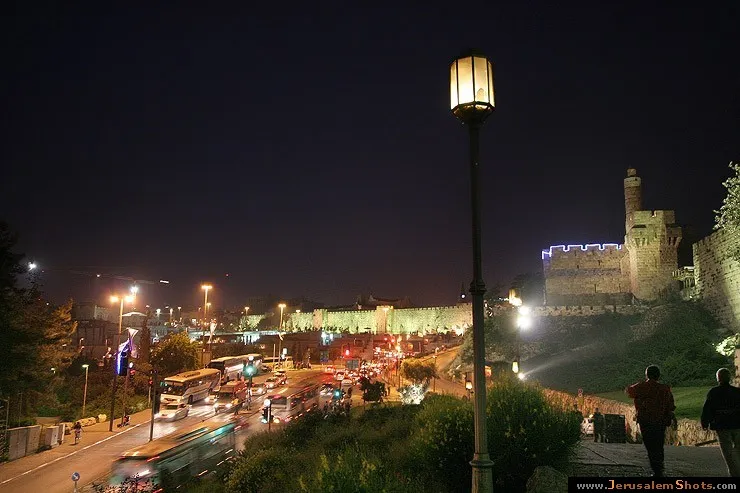
A night view of the illuminated Jerusalem walls and ancient towers, overlooking a busy road with traffic and street lamps.
Jerusalem. Center City.

Ancient Arabian cemetery.
Old City \ Minaret and Stone Rooftops in the Old City

A tall stone minaret stands prominently among the dense buildings of Jerusalem's Old City. The view highlights the mix of flat and tiled roofs, ancient stone walls, and a large tree growing near the tower. In the distance, another tower rises above the urban landscape.
Old City \ View of the Old City Walls with Palm Trees
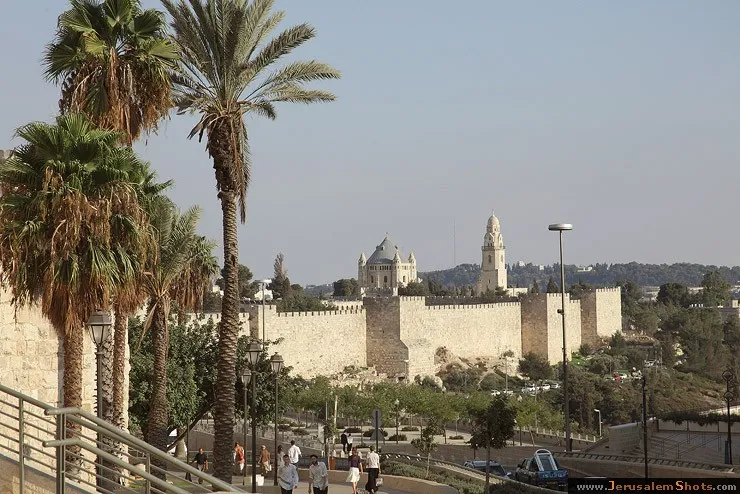
A view of the ancient stone walls of the Old City of Jerusalem, framed by tall palm trees in the foreground.
Old City \ Night view of ancient stone walls and ruins

A nighttime scene showing illuminated stone structures and ancient remnants of the Old City.
Old City \ Jerusalem Old City Walls at Twilight

A panoramic view of the ancient walls and illuminated buildings within the Jerusalem Old City at dusk. The city lights begin to glow as the sun sets.
Old City \ Ancient Walls of Jerusalem

A view of the massive stone walls of the Old City, overlooking a park with trees and a road.
Old City \ View of the Old City Walls and Tower of David
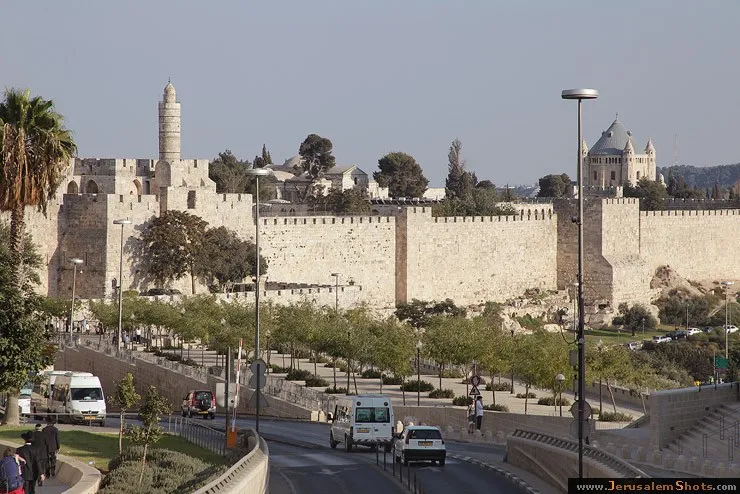
A scenic view of the ancient stone fortifications of Jerusalem's Old City, highlighting the Tower of David on the left and a domed abbey in the background, with traffic moving along the road below.
The Ancient Synagogue
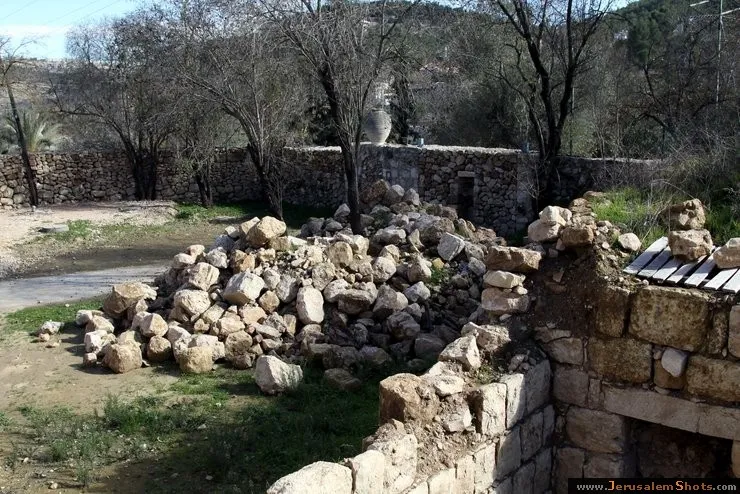
Motza is first mentioned in the Talmud (Tractate Succah) as the place where residents of Jerusalem used to cut their willow branches as one of the four species of fruits and plants required for the Festival of Sukkot.
Motza was rediscovered in 1860, when Shlomo Yecheskel and Yehoshua Yellin, residents of the Old City of Jerusalem, jointly acquired a plot of land in order to initiate and develop agriculture outside the walls of the Old City. Vineyards and trees were planted while using the local spring and well.
Motza was rediscovered in 1860, when Shlomo Yecheskel and Yehoshua Yellin, residents of the Old City of Jerusalem, jointly acquired a plot of land in order to initiate and develop agriculture outside the walls of the Old City. Vineyards and trees were planted while using the local spring and well.
The Ancient Synagogue
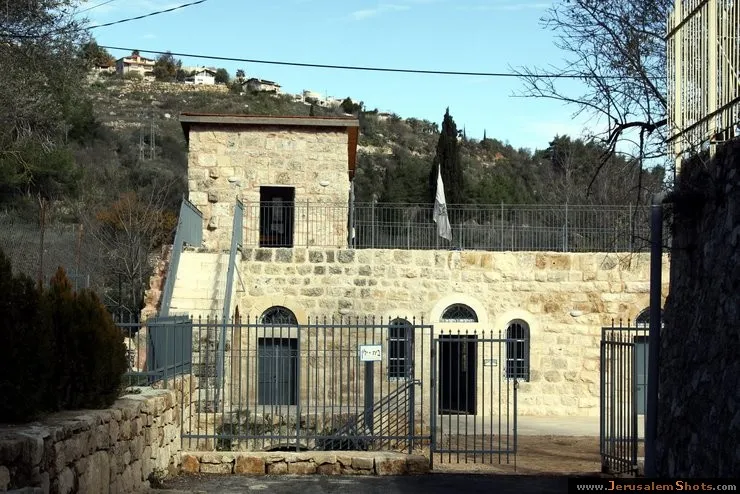
Motza is first mentioned in the Talmud (Tractate Succah) as the place where residents of Jerusalem used to cut their willow branches as one of the four species of fruits and plants required for the Festival of Sukkot.
Motza was rediscovered in 1860, when Shlomo Yecheskel and Yehoshua Yellin, residents of the Old City of Jerusalem, jointly acquired a plot of land in order to initiate and develop agriculture outside the walls of the Old City. Vineyards and trees were planted while using the local spring and well.
Motza was rediscovered in 1860, when Shlomo Yecheskel and Yehoshua Yellin, residents of the Old City of Jerusalem, jointly acquired a plot of land in order to initiate and develop agriculture outside the walls of the Old City. Vineyards and trees were planted while using the local spring and well.
The Ancient Synagogue

Motza is first mentioned in the Talmud (Tractate Succah) as the place where residents of Jerusalem used to cut their willow branches as one of the four species of fruits and plants required for the Festival of Sukkot.
Motza was rediscovered in 1860, when Shlomo Yecheskel and Yehoshua Yellin, residents of the Old City of Jerusalem, jointly acquired a plot of land in order to initiate and develop agriculture outside the walls of the Old City. Vineyards and trees were planted while using the local spring and well.
Motza was rediscovered in 1860, when Shlomo Yecheskel and Yehoshua Yellin, residents of the Old City of Jerusalem, jointly acquired a plot of land in order to initiate and develop agriculture outside the walls of the Old City. Vineyards and trees were planted while using the local spring and well.
The Ancient Synagogue
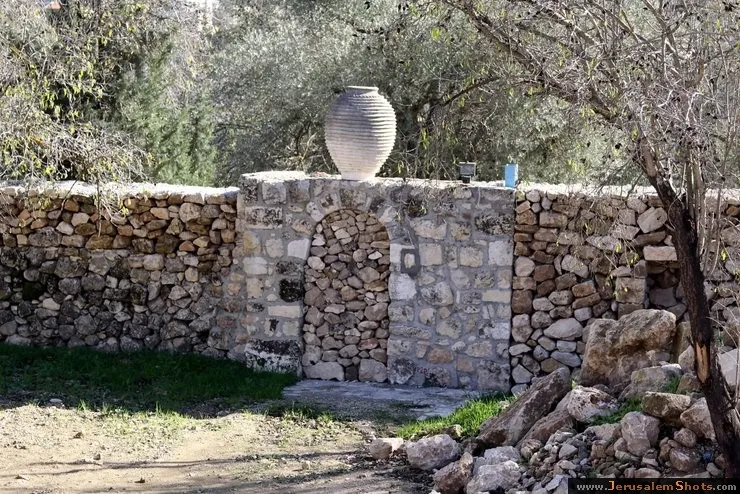
Motza is first mentioned in the Talmud (Tractate Succah) as the place where residents of Jerusalem used to cut their willow branches as one of the four species of fruits and plants required for the Festival of Sukkot.
Motza was rediscovered in 1860, when Shlomo Yecheskel and Yehoshua Yellin, residents of the Old City of Jerusalem, jointly acquired a plot of land in order to initiate and develop agriculture outside the walls of the Old City. Vineyards and trees were planted while using the local spring and well.
Motza was rediscovered in 1860, when Shlomo Yecheskel and Yehoshua Yellin, residents of the Old City of Jerusalem, jointly acquired a plot of land in order to initiate and develop agriculture outside the walls of the Old City. Vineyards and trees were planted while using the local spring and well.
The Ancient Synagogue
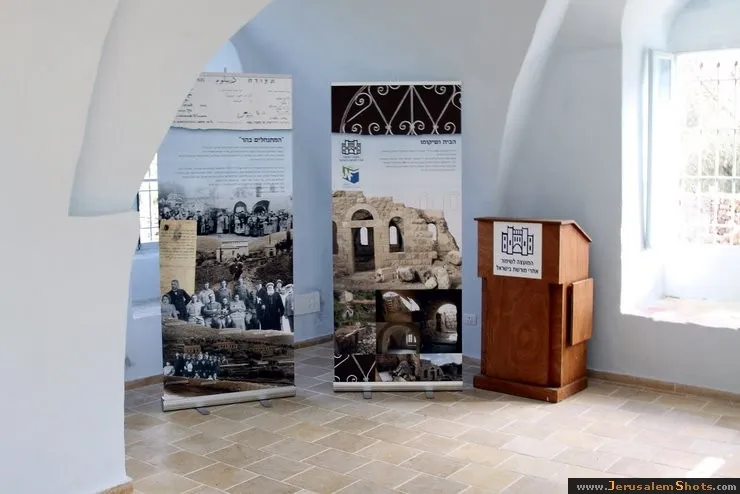
Motza is first mentioned in the Talmud (Tractate Succah) as the place where residents of Jerusalem used to cut their willow branches as one of the four species of fruits and plants required for the Festival of Sukkot.
Motza was rediscovered in 1860, when Shlomo Yecheskel and Yehoshua Yellin, residents of the Old City of Jerusalem, jointly acquired a plot of land in order to initiate and develop agriculture outside the walls of the Old City. Vineyards and trees were planted while using the local spring and well.
Motza was rediscovered in 1860, when Shlomo Yecheskel and Yehoshua Yellin, residents of the Old City of Jerusalem, jointly acquired a plot of land in order to initiate and develop agriculture outside the walls of the Old City. Vineyards and trees were planted while using the local spring and well.
The Ancient Synagogue

Motza is first mentioned in the Talmud (Tractate Succah) as the place where residents of Jerusalem used to cut their willow branches as one of the four species of fruits and plants required for the Festival of Sukkot.
Motza was rediscovered in 1860, when Shlomo Yecheskel and Yehoshua Yellin, residents of the Old City of Jerusalem, jointly acquired a plot of land in order to initiate and develop agriculture outside the walls of the Old City. Vineyards and trees were planted while using the local spring and well.
Motza was rediscovered in 1860, when Shlomo Yecheskel and Yehoshua Yellin, residents of the Old City of Jerusalem, jointly acquired a plot of land in order to initiate and develop agriculture outside the walls of the Old City. Vineyards and trees were planted while using the local spring and well.
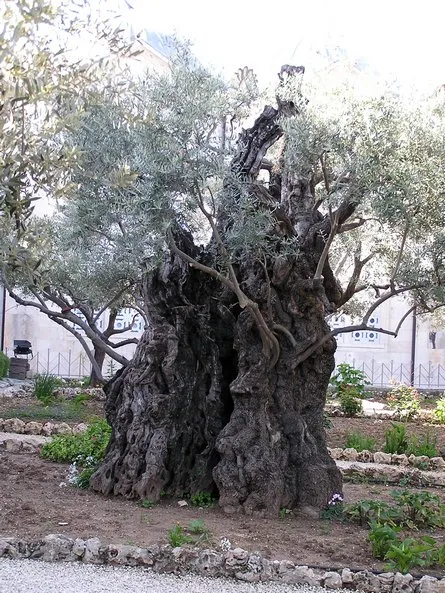
Garden of Gethsemane - Ancient Olive Tree
The Ancient Synagogue
Motza is first mentioned in the Talmud (Tractate Succah) as the place where residents of Jerusalem used to cut their willow branches as one of the four species of fruits and plants required for the Festival of Sukkot.
Motza was rediscovered in 1860, when Shlomo Yecheskel and Yehoshua Yellin, residents of the Old City of Jerusalem, jointly acquired a plot of land in order to initiate and develop agriculture outside the walls of the Old City. Vineyards and trees were planted while using the local spring and well.
Motza was rediscovered in 1860, when Shlomo Yecheskel and Yehoshua Yellin, residents of the Old City of Jerusalem, jointly acquired a plot of land in order to initiate and develop agriculture outside the walls of the Old City. Vineyards and trees were planted while using the local spring and well.
The Ancient Synagogue

Motza is first mentioned in the Talmud (Tractate Succah) as the place where residents of Jerusalem used to cut their willow branches as one of the four species of fruits and plants required for the Festival of Sukkot.
Motza was rediscovered in 1860, when Shlomo Yecheskel and Yehoshua Yellin, residents of the Old City of Jerusalem, jointly acquired a plot of land in order to initiate and develop agriculture outside the walls of the Old City. Vineyards and trees were planted while using the local spring and well.
Motza was rediscovered in 1860, when Shlomo Yecheskel and Yehoshua Yellin, residents of the Old City of Jerusalem, jointly acquired a plot of land in order to initiate and develop agriculture outside the walls of the Old City. Vineyards and trees were planted while using the local spring and well.
The Ancient Synagogue
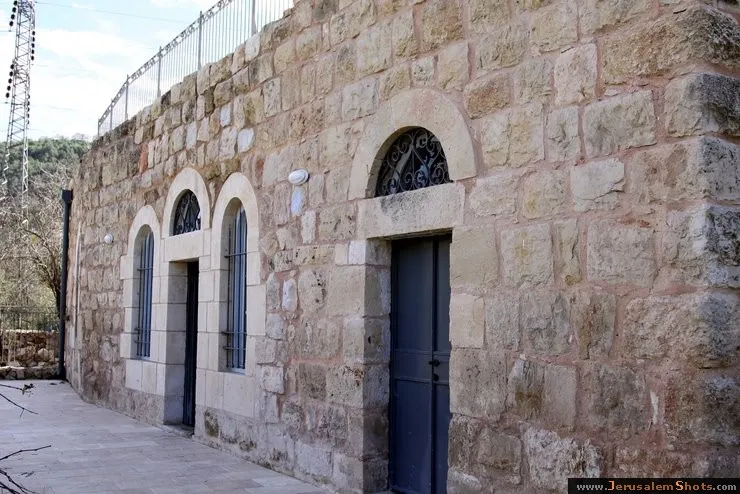
Motza is first mentioned in the Talmud (Tractate Succah) as the place where residents of Jerusalem used to cut their willow branches as one of the four species of fruits and plants required for the Festival of Sukkot.
Motza was rediscovered in 1860, when Shlomo Yecheskel and Yehoshua Yellin, residents of the Old City of Jerusalem, jointly acquired a plot of land in order to initiate and develop agriculture outside the walls of the Old City. Vineyards and trees were planted while using the local spring and well.
Motza was rediscovered in 1860, when Shlomo Yecheskel and Yehoshua Yellin, residents of the Old City of Jerusalem, jointly acquired a plot of land in order to initiate and develop agriculture outside the walls of the Old City. Vineyards and trees were planted while using the local spring and well.
Old City \ Path Along the City Walls
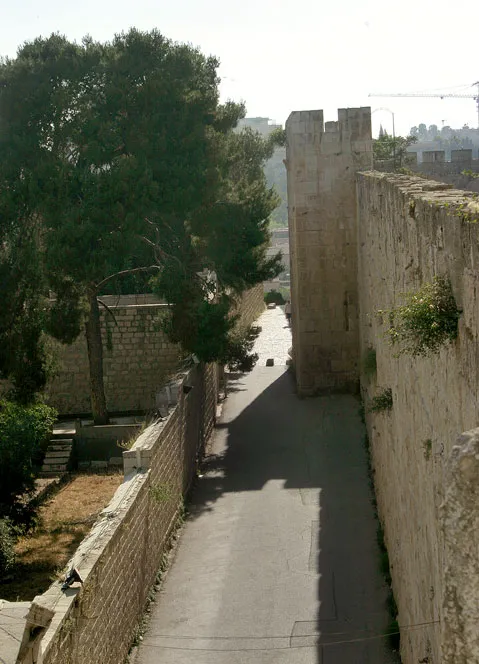
A paved walkway runs beside the high stone fortifications of the Old City. Large pine trees cast shadows on the left, while the ancient wall rises on the right, with modern buildings and a crane visible in the distance.
Jerusalem. Center City.
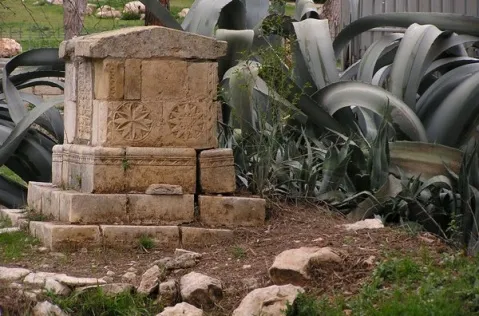
Ancient Arabian cemetery.
Jerusalem. Center City.
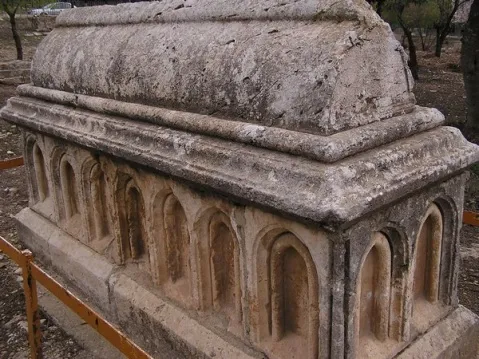
Tomb on an ancient Arabian cemetery.
Jerusalem. Center City.
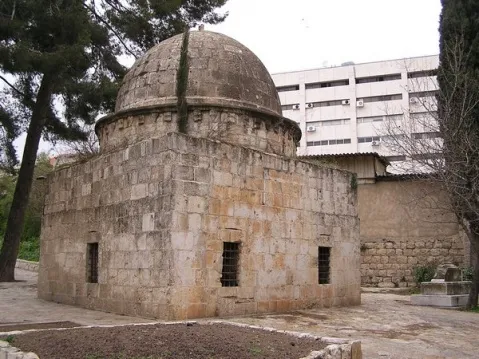
Ancient Arabian cemetery.
Jerusalem Model Showing the Second Temple

The model of Jerusalem in ancient times recently moved from the Holyland Hotel to the Israel Museum.
 © Al Teich
Old City \ Stone Steps to the Western Wall at Night

A night view framed by stone walls, looking down a staircase with a metal railing towards the illuminated Western Wall plaza. Warm streetlights cast a glow on the ancient stones as people walk in the distance.
Old City \ Layered Graffiti in Stone Niche
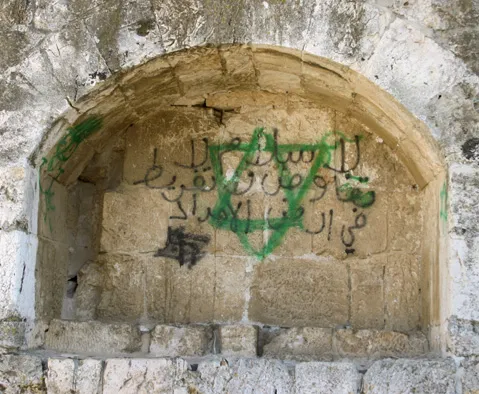
A recessed stone archway features layered graffiti, including a green Star of David painted over Arabic script and a black symbol, reflecting the complex and intersecting narratives found on Jerusalem's ancient walls.